





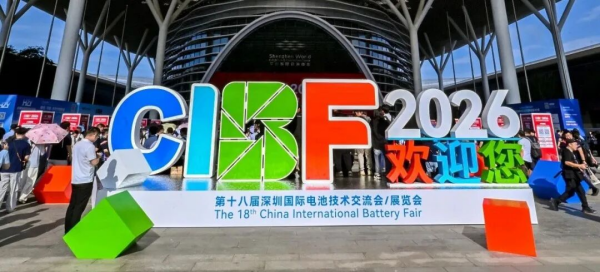
From May 13th to 15th, CIBF2026 was held at the Shenzhen International Convention and Exhibition Center. As a benchmark for the global battery industry, this exhibition brings together more than 3,200 companies and 400,000 professional visitors. 500Ah+ energy storage cells, solid-state batteries, and AI manufacturing have become the core keywords.
Different from previous years, the focus of industry discussions this year has shifted significantly - the industry has completely bid farewell to the previous homogenization competition of production capacity and cell parameters, and instead focuses on enterprise scenario adaptation, customized solutions and segmented track barriers.
If the industry has been discussing whether 314Ah will become the upper limit of energy storage battery capacity in the past year, then CIBF2026 has given the answer - the 500Ah+ era has officially arrived.
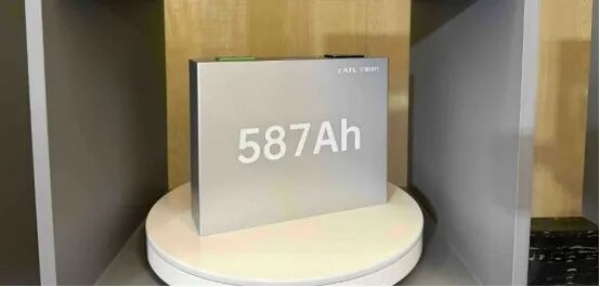
At the exhibition, many leading companies released signals on the high-capacity route: CATL demonstrated 588Ah energy storage cells and CTP3.3 module-less integration platform to further improve system integration efficiency; Yiwei Lithium Energy launched 628Ah batteries, continuing to refresh the capacity boundary; many companies deployed new battery cell solutions around high-safety and high-power routes. The industry is accelerating into a new stage of higher energy density, larger capacity, and longer cycle life.
But the larger the capacity, the more systematic upgrades of material systems, manufacturing processes and thermal management capabilities will be tested. The traditional quality control method that relies on random inspection and finished product testing is increasingly difficult to meet the needs of next-generation battery manufacturing. This has also made in-situ, non-destructive, and online testing a new quality management direction.
As power batteries and consumer batteries continue to evolve towards higher specific energy density, the anode material system is also constantly upgraded. In recent years, new materials represented by silicon-carbon anodes have gradually become an important direction for the industry to improve performance.

However, while material innovation brings performance improvements, it also places higher requirements on the manufacturing process. Compared with traditional negative electrode systems, silicon materials are more active. During the pulping, homogenization and transportation processes, they are more likely to produce side reactions and release trace gases after contact with moisture and air in the environment. This means that bubble problems within the slurry are becoming more frequent and more hidden than in the past.
At the same time, during long-distance transportation and circulation of slurry, phenomena such as uneven dispersion, particle agglomeration, and state fluctuations may be further superimposed, causing manufacturing risks to continue to accumulate toward the front end.
If we were to choose the topic that attracted the most attention at CIBF this year, there would be almost no suspense about solid-state batteries. Many leading companies have clearly stated the time node for industrialization, and 2026-2027 is generally regarded as the key window for mass production of solid-state batteries.
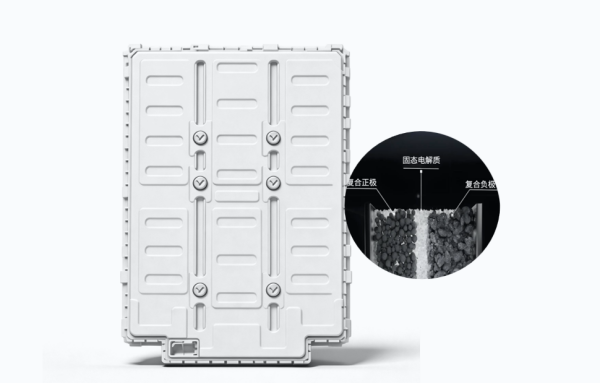
Industry consensus is becoming increasingly clear: the biggest challenge for solid-state batteries is no longer laboratory performance, but mass production manufacturing. Semi-solid and all-solid systems still face many problems during the industrialization process: insufficient uniformity of electrolyte solidification; insufficient contact between solid-liquid and solid-solid interfaces; internal gas defects affect ion transmission efficiency; local high impedance leads to increased polarization; the risk of lithium dendrites still needs to be solved; and the consistency of the process is difficult to stably replicate.
The competition for mass production of solid-state batteries is, to some extent, becoming a competition between manufacturing capabilities and quality control capabilities.
At this year’s exhibition, AI became another main line running through the entire industry chain.
As the complexity of battery R&D and manufacturing increases, methods that relied on experience accumulation and trial-and-error verification in the past are gradually being replaced by data-driven models. The changes brought about by AI not only occur in the material research and development stage, but also begin to penetrate into the production and manufacturing process. In the future manufacturing system, equipment may no longer just perform inspections, but can also perform learning, identification and risk judgment based on historical data.
This means that the logic of quality management is changing: from discovering problems to predicting problems in advance; from empirical judgment to data decision-making; from sampling management to full-process online management. For new production capacities that are rapidly expanding, intelligent quality control capabilities are becoming an important factor in determining mass production efficiency.
From 500Ah+ energy storage cells, to the industrialization of solid-state batteries, to the in-depth entry of AI into the manufacturing system, the industry is entering a new production expansion cycle.
Behind every jump in energy density means more complex materials, more stringent processes, and higher requirements for manufacturing consistency. As quality issues continue to arise, relying solely on final inspections and random inspections will no longer be able to meet the mass production needs of next-generation batteries.
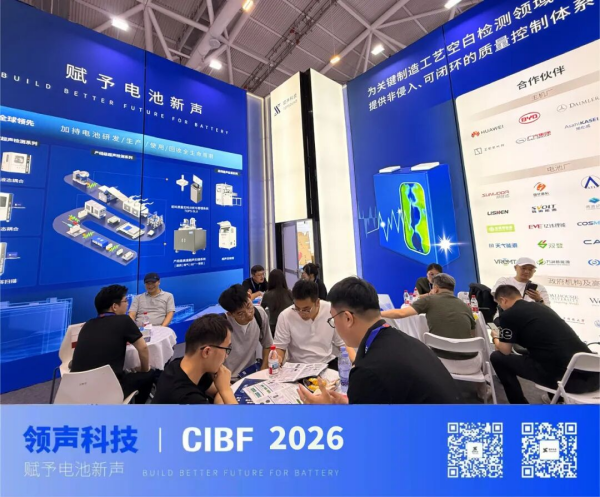
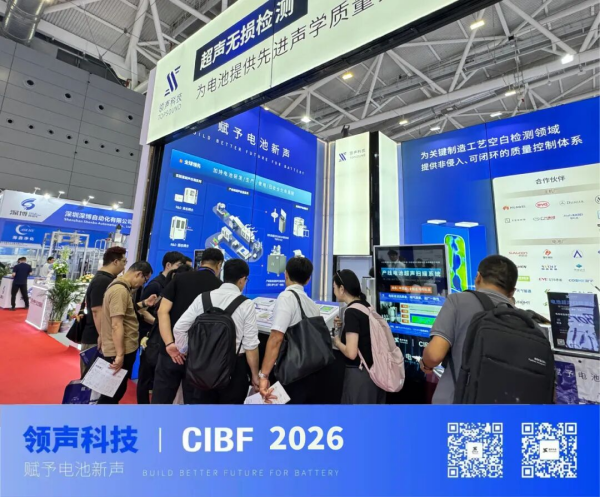
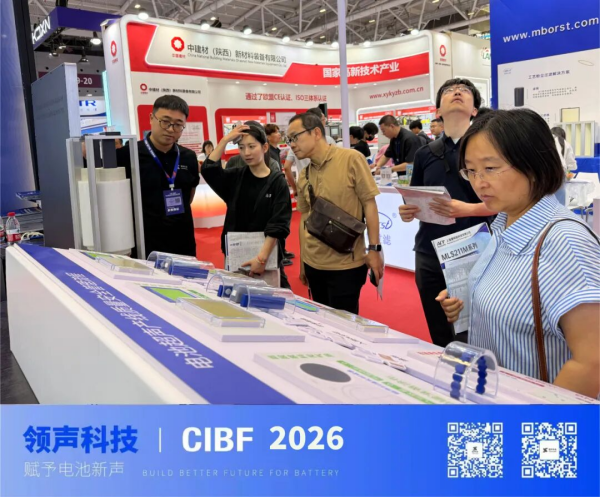
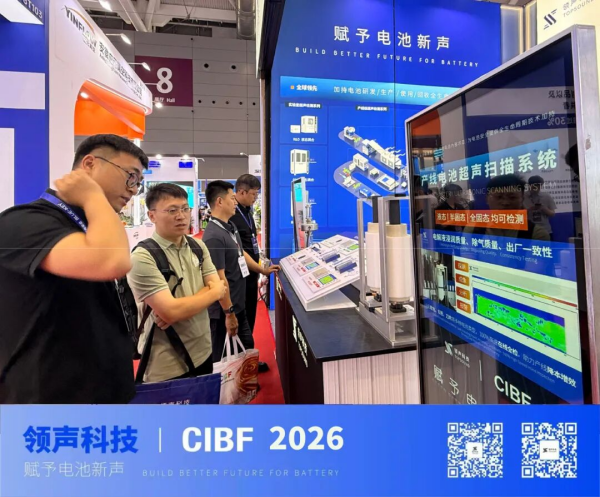
Focusing on slurry, wetting, degassing, cell consistency, and critical status assessment during the solid-state battery manufacturing process, the industry's demand for non-destructive, online, real-time, and data-based testing capabilities is continuing to increase.
Topsound Technology continues to lay out the ultrasonic quality management system for the entire battery life cycle, covering key processes such as the slurry stage, wetting stage, degassing stage, and cell consistency assessment.
Based on ultrasonic's highly sensitive perception of the gas-liquid-solid interface, combined with AI image learning and data learning models, it can quickly identify and analyze the internal status, defect characteristics and manufacturing consistency of the battery, providing more advanced and continuous quality data support for complex manufacturing processes.
<Can be detected in liquid, semi-solid and fully solid states>
At the same time, it further adapts to the testing needs of liquid, semi-solid and all-solid-state batteries, helping the next generation of battery manufacturing to develop in a more stable, safer and larger-scale direction.
Follow Topsound Technology on WeChat for more industry insights
 The Global Leading Expert of Battery Quality and Safety