






In today's era of rapid iteration of battery technology, how can we truly "see through" a battery? Recently, a long review "Ultrasonic testing in battery research and production" jointly written by Drexel University, Columbia University, Liminal Insights, General Motors R&D Center and other institutions in the United States and published in the top journal in the energy field "Joule" (IF: 35.4) provides us with a panoramic outline of the application blueprint, core advantages and future challenges of ultrasonic technology in the battery field.
This article summarizes the battery ultrasonics research results of the past ten years and makes a more detailed plan for the industrialization of ultrasonic testing from a macro perspective. Today, the Topsound Technology team will take you to an in-depth interpretation of this document, combined with our industrial practice, to talk about the key leap of ultrasound from "laboratory" to "production line".
As a "living body", the battery's internal complex electrochemical-mechanical coupling process has been in a "blind box" state for a long time. Traditional electrochemical methods can judge "good or bad", but it is difficult to tell the specific location and shape of "lesions". This review points out that ultrasonic testing (UT) technology, due to its unique advantages of low cost, non-destructive, and real-time monitoring, is becoming one of the most critical keys to opening this "blind box".
However, this review jointly written by academia and industry (General Motors), on the one hand, summarizes the huge advantages of UT, and on the other hand, calmly points out the huge challenges it faces from laboratory research to industrial manufacturing and deployment. This is highly consistent with the understanding that Topsound Technology has been deeply involved in the battery ultrasonics track for many years.
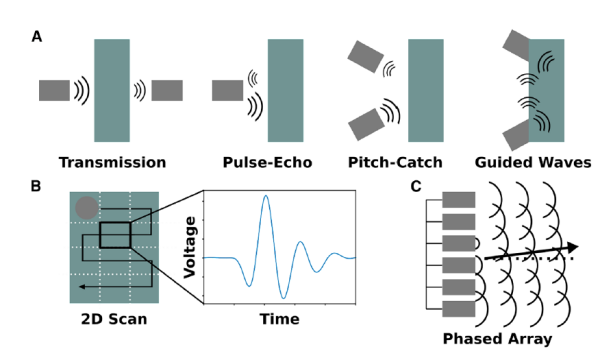
Figure 1. Schematic diagram of ultrasonic testing experimental configuration.
Based on the sensitivity of ultrasonic waves to material density, elastic modulus and interface impedance, UT achieves accurate presentation of the internal state of the battery and can provide timely warnings of abnormal conditions. It mainly has the following applications:
SOX (status/health) tracking: During the charging and discharging process of the battery, the Young's modulus of the graphite anode can change by a factor of three. This microscopic "stiffness" change will be directly reflected in the propagation time (ToF) and signal strength of the ultrasonic wave. Compared with traditional BMS estimation that relies on voltage and current, the machine learning model that integrates ultrasonic signals can significantly reduce the SOC estimation error.
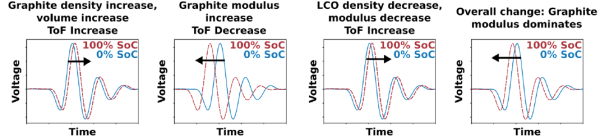
Figure 2. Shift in ultrasonic ToF under different SOC
gas generation and wetting monitoring: Ultrasound is extremely sensitive to the gas-solid/liquid interface, and even tiny bubbles or dry areas will cause severe signal attenuation. Ultrasonic imaging "visualizes" the electrolyte wetting process and aging gas generation monitoring, which has extremely high application value.
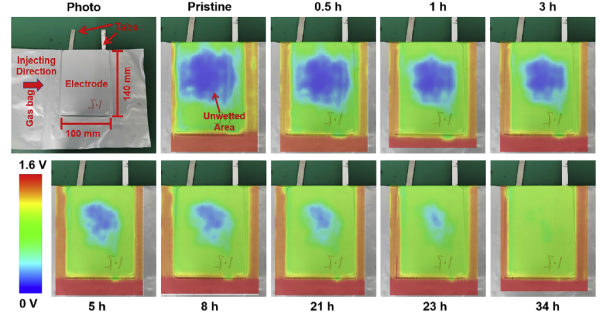
Figure 3. Ultrasonic transmission images of the internal wetting state of the battery under different resting times.
lithium plating and failure warning: The precipitation of lithium metal will form a new acoustic interface. Through research on the accurate identification and quantitative lithium plating of ultrasonic ToF extension, resonance frequency drift and other indicators, the idea of establishing an "acoustic fingerprint-failure grade" hierarchical early warning system was proposed.
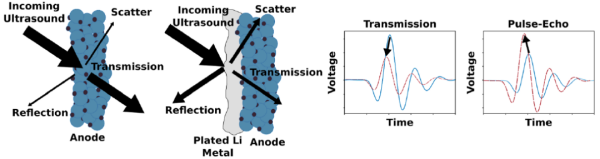
Figure 4. Ultrasonic ToF shift caused by lithium plating in the negative electrode of lithium-ion battery
These excellent laboratory results have laid a solid foundation for UT's large-scale application in the battery industry, but it still faces several "key challenges" when moving towards large-scale manufacturing.
As a document that gathers the perspective of GM's manufacturing department, it unabashedly discusses the pain points of UT industrialization: First, it is difficult to balance speed and accuracy. The current laboratory-level scanning acoustic microscope (SAM) acquisition method is difficult to match the GWh-level production line 50-100 m/min high-speed line speed; the second is the physical limitations of the coupling agent. Traditional liquid coupling is difficult to meet the water-free and pollution-free requirements of large-scale battery production line manufacturing, and air coupling faces the problem of signal attenuation; the third is the decoupling of massive data processing and physical meaning. How to automatically and batchly decompose signals with different characteristics such as temperature rise, lithium plating, and gas generation from the high-dimensional and information-rich waveforms generated by UT to avoid false alarms is a major test at the algorithm level.
Focusing on these industrialization pain points, the phased array ultrasonic line scan module and drum-type dry-coupled battery ultrasonic fast scanning technology independently developed by the Topsound team have achieved liquid-free coupling, low pollution, and high-tempo detection, greatly improving the efficiency of in-situ and online full inspections, and further integrating electrochemical models. Integrated with the acoustic propagation model and combined with the AI image learning and data analysis framework, it can realize automatic identification, hierarchical early warning and failure attribution of battery internal status, defect characteristics and manufacturing consistency, promote ultrasonic testing from laboratory verification to production line application, and achieve large-scale implementation.
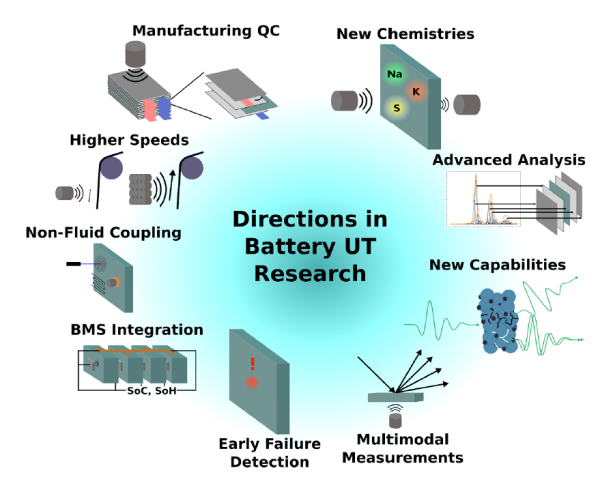
Figure 5. The future development direction of battery ultrasonic testing
From "invisible" to "quantifiable": making battery status perceptible
Problems such as gas generation, uneven wetting, and lithium plating inside the battery often occur earlier than electrical performance failure. Based on battery ultrasonic testing technology, Topsound Technology converts internal states into readable signals to achieve real-time monitoring of SOC/SOH, wetting and lithium plating trends, and promotes battery management from empirical judgment to data verification.
From laboratory to production line: clearing the "last mile" of implementation
For high-speed production lines, Topsound Technology provides phased array ultrasonic line scan modules and drum-type dry-coupled ultrasonic solutions, supporting in-situ, online, and full inspection of pouch, square, and other specifications of batteries. At the same time, it forms a "detection-identification-response" closed loop through AI quality control, and is linked with the MES system to upload inspection data in real time, assisting traceability analysis, process optimization, and yield improvement, and opening up the "last mile" of the production line.
We have verified the cycle stability, wetting uniformity, failure analysis and other scenarios of more than 60 leading car companies and battery manufacturers around the world with numerous studies mentioned in the literature, and have collected process know-how unique to the industry and derived from large batches of samples.
With the mission of "making batteries more transparent", Topsound Technology not only always pays attention to macro-industry changes, but is also willing to become a practitioner in overcoming industrialization problems one by one. Although the road is far away, it will be reached soon; although the wish is firm, it will be fulfilled if you persevere. We believe that when ultrasonic technology truly realizes the entire chain from research to manufacturing to cascade utilization, a safer, more efficient, and more sustainable new energy world will accelerate.
Ultrasonic testing in battery research and production
Follow Topsound Technology on WeChat for more industry insights
 The Global Leading Expert of Battery Quality and Safety